


Comparing the Crosstrek Hybrid and Forester Hybrid
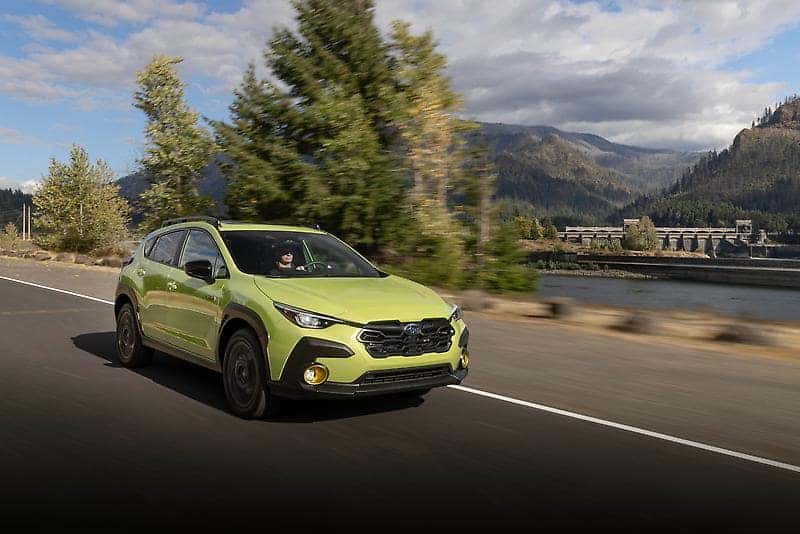
If you appreciate how Subaru engineers and designs its vehicles and also like to minimize your carbon footprint or pay less for gas, Subaru’s hybrid offerings have a history of coming and going. But now Subaru seems to have settled on a hybrid technology and has applied it to two of its most popular models, the Crosstrek and Forester. If you are attracted to the idea of a Subaru hybrid but are not sure which one, this Twin Falls Subaru blog post will help you sort it out.
No Differences Here
Let’s start with what they have in common, beginning with the hybrid drivetrain itself. Both models have at their core a naturally aspirated 2.5-liter horizontally opposed (Boxer) 4-cylinder engine combined with a pair of motor generators, with the hybrid system licensed from occasional vehicle collaborator Toyota. Both models have a total system power of 194 horsepower and 199 lb-ft of torque. The power is managed by a continuously variable transmission. All-wheel drive is standard on both models, and while some hybrid crossovers achieve all-wheel drive by installing an electric motor at the rear to drive the wheels, Subaru sticks with its symmetrical all-wheel-drive system.
The mechanical AWD system sacrifices a bit of fuel efficiency, but Subaru’s confidence in its well-honed AWD system is worth it in their view. The mileage is close: the Forester gets 35 city/34 highway/35 combined, while the lighter Crosstrek Hybrid is rated at 36 for all three. With both models sharing a 16.6-gallon tank, the Crosstrek Hybrid has a phenomenal 598-mile highway range, with the Forester Hybrid not too far behind at 564 miles.
While the Forester is longer overall, the models share the same 105.1-inch wheelbase, making their turning circles identical at 35.4 feet. Both models also share the same ground clearance of 8.7 inches. On the road, with the same drivetrain, the Crosstrek Hybrid weighs about 235 fewer pounds and punches a smaller hole in the air, clocking 7.5 seconds from 0-60 compared with 8.1 seconds for the Forester Hybrid.
While there are differences, both dashboards look very similar, anchored by the same 11.6-inch portrait-format center touchscreen backed by the same operating system. They also include features such as wireless Apple CarPlay, Android Auto, and over-the-air software updates. Both model lines come standard with Subaru’s EyeSight Driver Assist Technology, featuring:
- Automatic Pre-Collision Braking
- Advanced Adaptive Cruise Control
- Pre-Collision Throttle Management
- Blind-Spot Detection & Rear Cross-Traffic Alert
- DriverFocus Distraction Mitigation
Where They Differ
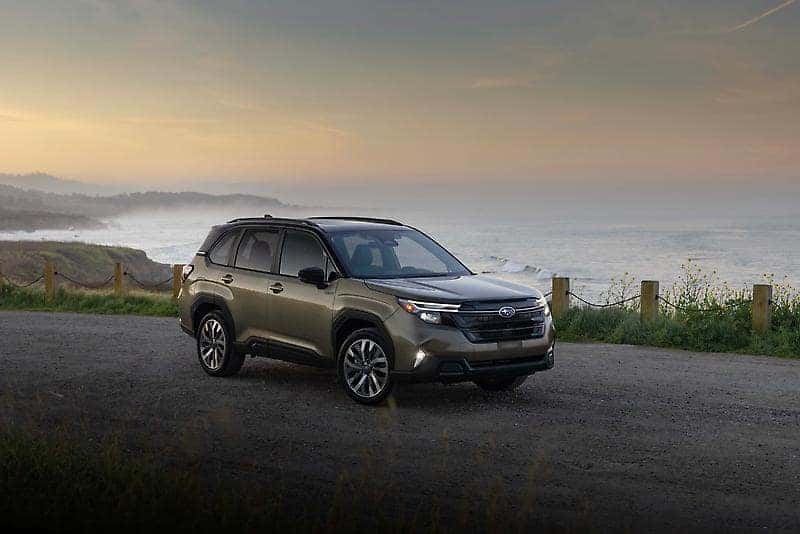
Where these models differ the most is what you have already guessed by just looking at them, specifically, size and shape. As mentioned, the Forester is about 7 inches longer overall. It is also taller by about five inches and is about an inch wider. This gives the Forester greater numbers in almost all interior measurements:
Front legroom: 43.3 vs. 42.9 inches
Front headroom: 40.0 vs. 38.7 inches
Front shoulder room 57.7 vs. 56.8 inches
Rear legroom: 39.4 vs. 36.7 inches
Rear headroom: 37.7 vs. 37.6 inches
Rear shoulder room 56.7 vs. 55.3 inches
The Forester’s longer rear overhang and upright roofline create a distinct cargo advantage, with 27.5 cubic feet behind the rear seats, compared with 18.6 for the Crosstrek. With the seats folded down, the Forester boasts 69.1 cubic feet, compared with 50.6 for the Crosstrek.
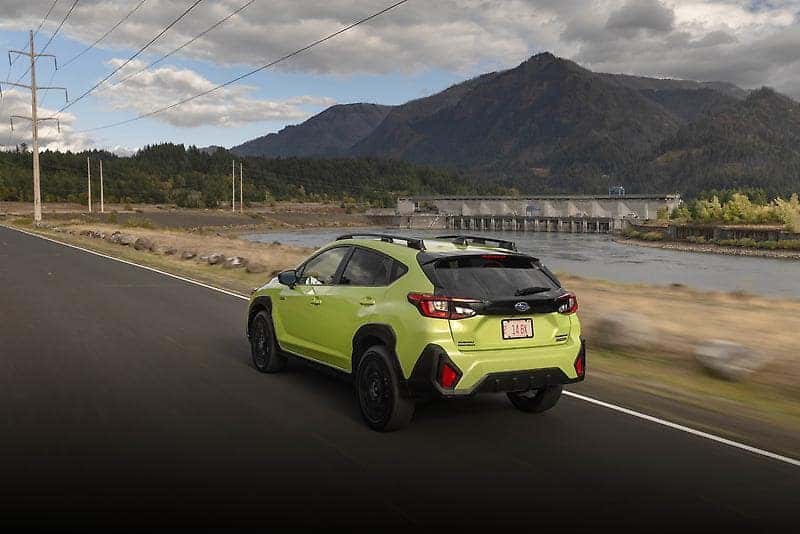
While the Forester has more passenger and cargo space, the Crosstrek excels on rough terrain. For the approach angle, the Forester has a slight advantage at 18.0 degrees, compared with 19.0 for the Crosstrek, and both share the same breakover angle of 19.3 degrees. The key difference is the departure angle, which is an impressive 30.1 degrees for the Crosstrek, compared with 24.6 degrees for the Forester.
Finally, there is the difference in purchase price, which isn’t all that far apart, either. The Crosstrek Hybrid has a starting MSRP of $33,997, while the Forester starts at $733 more at $34,730.
So, in the end, the Forester offers more cabin space, particularly in the rear seats, and carries more cargo, making it the obvious choice if those things are a priority. If the Crosstrek’s space meets your needs, it will cost a bit less to buy and operate, while providing snappier on-road acceleration and greater off-road agility.
You may have already made your choice based on the above numbers. Twin Falls Subaru encourages you to visit our store and test-drive both models to experience the subtle differences that numbers and spec sheets don’t cover.
0 comment(s) so far on Comparing the Crosstrek Hybrid and Forester Hybrid